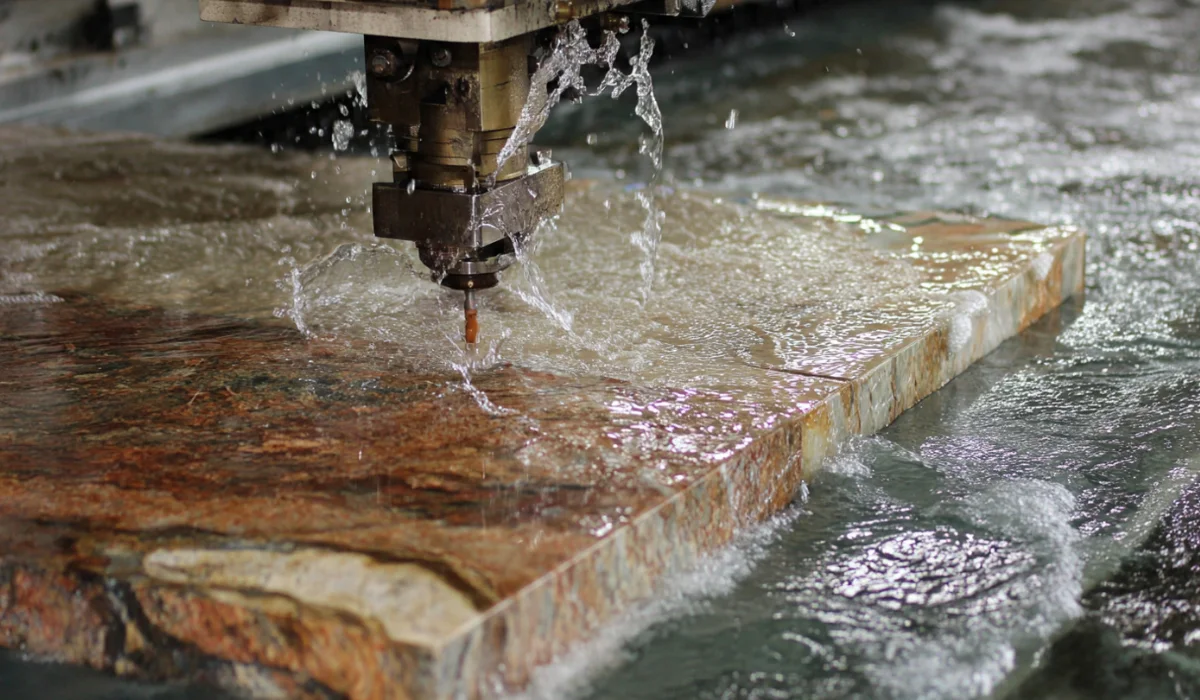
Granite is
one of the most durable and visually stunning natural stones used in
construction and interior design. From luxury kitchen countertops to commercial
flooring and decorative wall panels, granite requires precise cutting to
maintain both strength and aesthetics.
For
decades, traditional cutting methods such as saw cutting and manual shaping
dominated the stone industry. However, modern technology has introduced a
revolutionary alternative to waterjet cutting.
Today,
architects, builders, and homeowners increasingly prefer Granite waterjet cutting because it
delivers unmatched accuracy, cleaner finishes, and greater design flexibility
compared to conventional techniques.
Waterjet cutting granite uses a high-pressure stream of water mixed
with abrasive particles to cut through stone. The process operates at extremely
high pressure, allowing it to slice through thick granite slabs without
generating heat.
Unlike
blades or drills, the waterjet produces a narrow, precise cutting path, making
it ideal for both straight cuts and intricate patterns.
Before
waterjet technology, fabricators relied on:
Circular saw blades
Diamond wire cutting
Manual chiseling
CNC blade machines
While
effective for basic shapes, these methods often produce heat, vibration, and
mechanical stress factors that can lead to cracks, chips, or uneven finishes in
natural stone.
Superior Precision and Accuracy
One of the
biggest benefits of precision stone
cutting using waterjets is its
exceptional accuracy.
Waterjet
machines can follow complex digital designs with minimal deviation, producing
perfectly shaped components every time. This level of precision is crucial for:
Decorative inlays
Floor medallions
Logo engravings
Architectural elements
Traditional
cutting tools struggle to achieve this level of detail.
Traditional
cutting generates friction and heat, which can cause:
Micro-cracks
Surface discoloration
Structural weakening
Waterjet
cutting is a cold process, meaning it produces no heat-affected zone.
This
preserves the natural strength, color, and durability of the granite — a major
advantage for high-value installations.
Granite is
extremely hard but also brittle. Mechanical cutting tools can cause chipping
along edges.
With granite slab cutting using waterjets:
Edges remain smooth
Minimal post-processing is required
Material integrity is preserved
This makes
waterjet cutting ideal for visible surfaces such as countertops, staircases,
and decorative panels.
Traditional
tools are limited to straight or gently curved cuts. In contrast, custom granite cutting with waterjets can produce:
Intricate geometric patterns
Floral designs
Detailed logos
Artistic wall panels
Interlocking stone pieces
Architects
and interior designers rely on this technology to bring creative visions to
life.
As
construction and interior design standards continue to rise, precision and
quality have become non-negotiable. Traditional granite cutting methods still
serve basic needs, but they simply cannot match the versatility and accuracy of
modern technology.
Granitewaterjet cutting offers cleaner edges, intricate detailing, structural safety, and outstanding efficiency, making it the preferred choice for contemporary stone fabrication.