When designing a feature wall, choosing the right stone can have a major impact on the appearance, durability and maintenance of the finished space. Natural stone vs engineered stone for feature walls is a common consideration for architects, interior designers, builders and homeowners.
Natural stone offers unique colours, textures and patterns created by nature, while engineered stone provides greater consistency and controlled design options. Both materials can create attractive feature walls, but their suitability depends on the project's location, design style, maintenance requirements and budget.
Understanding the differences between natural and engineered stone can help you select a material that matches both the visual concept and practical requirements of your project.
Natural stone is quarried directly from natural stone formations and then cut and finished for architectural applications. Granite, marble, sandstone, limestone and slate are some commonly used natural stones.
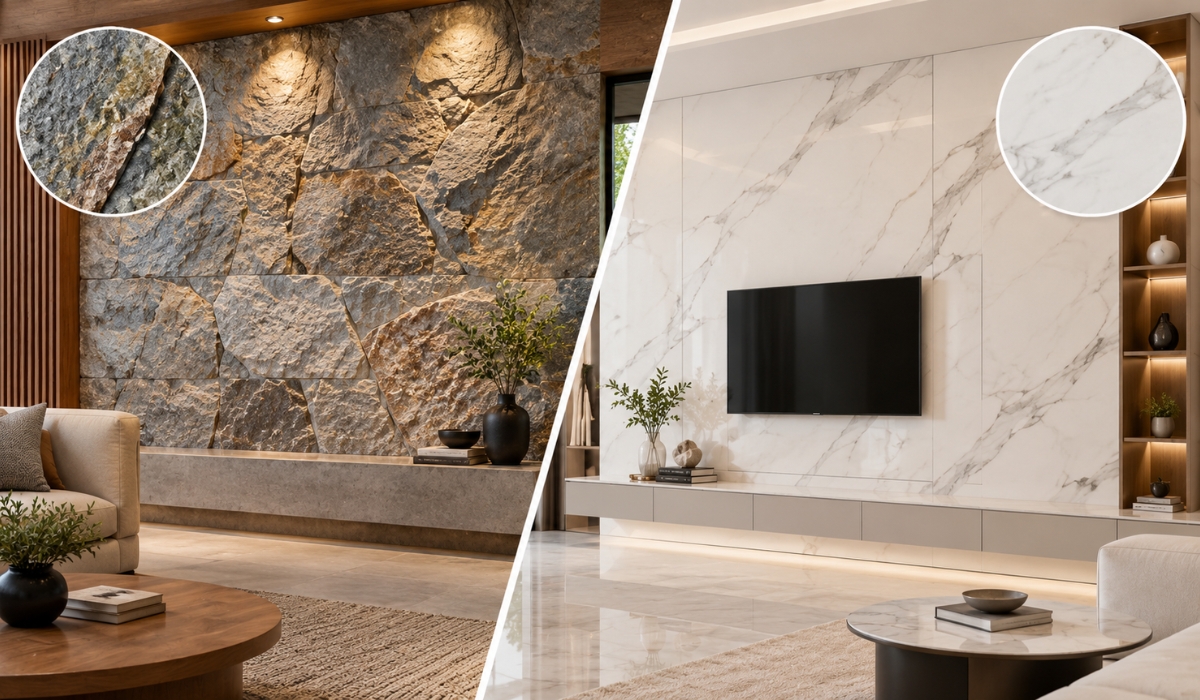
Because it is naturally formed, every slab or piece can have variations in colour, veining, texture and pattern. This gives natural stone feature walls an individual appearance that cannot always be replicated.
Engineered stone, on the other hand, is manufactured using a combination of stone-based materials, binders, pigments and other components. It is produced under controlled conditions, allowing manufacturers to achieve more consistent colours, patterns and finishes.
The choice between the two therefore depends on what the project prioritises.
Neither option is automatically better for every feature wall. The correct choice depends on the application and the expected performance.
Natural stone offers a distinctive appearance because every piece can have natural variations. Veining, colour movement and surface texture can make a feature wall visually interesting.
Engineered stone generally provides a more uniform appearance, which can work well with modern and minimalist interiors where consistency is important.
Durability depends on the specific stone, thickness, installation method and location.
Some natural stones such as granite can provide excellent durability for suitable applications. Engineered stone can also be durable, particularly in controlled interior environments.
For exterior feature walls, the selected material should be evaluated for weather, moisture and environmental exposure.
Maintenance requirements vary between different materials and finishes.
Some natural stones may require periodic sealing or additional care depending on their porosity and application. Engineered stone may offer easier maintenance in certain interior applications, but the manufacturer's recommendations should always be followed.
One of the main differences is consistency.
Natural stone naturally varies from piece to piece. Engineered stone is manufactured to achieve a more controlled appearance, making it easier to maintain a consistent design across multiple areas.
Natural stone can provide a more organic and distinctive character, while engineered stone can provide a cleaner and more controlled visual style.
The choice should therefore match the overall architectural language of the project.
Both natural and engineered stone can be used in different types of feature wall applications, but the suitability depends on the specific material.
Feature walls in living rooms are one of the most common applications.
Natural stone can create a warm, textured and luxurious appearance, while engineered stone can provide a more uniform contemporary look.
A stone feature wall at an entrance can create a strong first impression.
Natural stone can work particularly well for projects where the design aims to create a premium or natural architectural character.
Hotels, restaurants, offices and retail spaces may use feature walls to strengthen their interior identity.
Engineered stone can be useful where a consistent pattern or colour needs to be repeated across multiple areas.
Natural stone can be considered for exterior applications where the selected material is suitable for the environmental conditions.
For exterior installations, factors such as water exposure, temperature changes, fixing systems and maintenance should be considered before selecting the material.
Feature walls are commonly used behind reception desks, in hotel lobbies and other hospitality spaces.
Both materials can be used to create premium visual effects, depending on the desired texture, colour and design.
Choosing between natural and engineered stone should begin with the requirements of the project rather than appearance alone.
First determine whether the feature wall is indoors or outdoors.
Interior applications generally provide more flexibility, while exterior walls need materials that can withstand the relevant environmental conditions.
For a natural, organic or highly individual appearance, natural stone may be a better fit.
For contemporary interiors requiring consistent colour and pattern, engineered stone may be worth considering.
Ask how much maintenance the finished wall can reasonably receive.
The porosity, surface finish and installation environment should be considered when evaluating maintenance requirements.
Material price is only one part of the total project cost.
Also consider:
A proper comparison should consider the complete installed cost, rather than comparing material prices alone.
Large-format feature walls may require careful planning for transportation, handling and installation.
The wall structure, panel size, weight, fixing method and access to the site should be reviewed before finalising the material.
There is no universal answer to which material is better.
If the main priority is natural variation, texture and individual character, natural stone can be an excellent choice.
If the priority is consistent colour, controlled patterns and a uniform contemporary appearance, engineered stone may be more suitable for certain applications.
For interior feature walls, both can provide strong design results when properly selected and installed.
For exterior walls, material selection should be more carefully evaluated based on climate, moisture, structural requirements and the manufacturer's or stone supplier's recommendations.
The best material is ultimately the one that matches the project's design, location, performance requirements, maintenance expectations and budget.
Before finalising your material, check the following:
For custom feature walls, early coordination between the architect, designer, stone fabricator and installation team can help prevent issues during execution.
When comparing natural stone vs engineered stone for feature walls, both materials offer different advantages.
Natural stone provides natural variation, texture and individual character, while engineered stone can provide greater consistency and controlled design options. The right choice depends on the project's location, design style, durability requirements, maintenance expectations and overall budget.
Instead of choosing a material based only on appearance or initial price, consider the complete application, including fabrication, fixing and installation requirements. For custom architectural feature walls, proper material selection and detailing can make a significant difference to the final result.
Not necessarily. Natural stone offers unique variations and natural character, while engineered stone provides greater consistency. The better option depends on the location, design, maintenance requirements and overall project specifications.
Maintenance depends on the specific material and finish. Some natural stones may require sealing, while engineered stone can be easier to maintain in certain interior applications. Always follow the manufacturer's or stone supplier's care recommendations.
Yes, suitable natural stones can be used for exterior feature walls. However, the stone should be selected based on weather exposure, moisture, temperature changes, fixing requirements and the specific site conditions.
Suitability depends on the specific engineered stone product and manufacturer's recommendations. Not every engineered stone is designed for outdoor exposure, so the product specification should be checked before installation.
There is no universal answer. Total cost depends on the material, thickness, design, fabrication, finishing, transportation, fixing system and installation. Comparing the complete installed cost provides a more useful comparison.