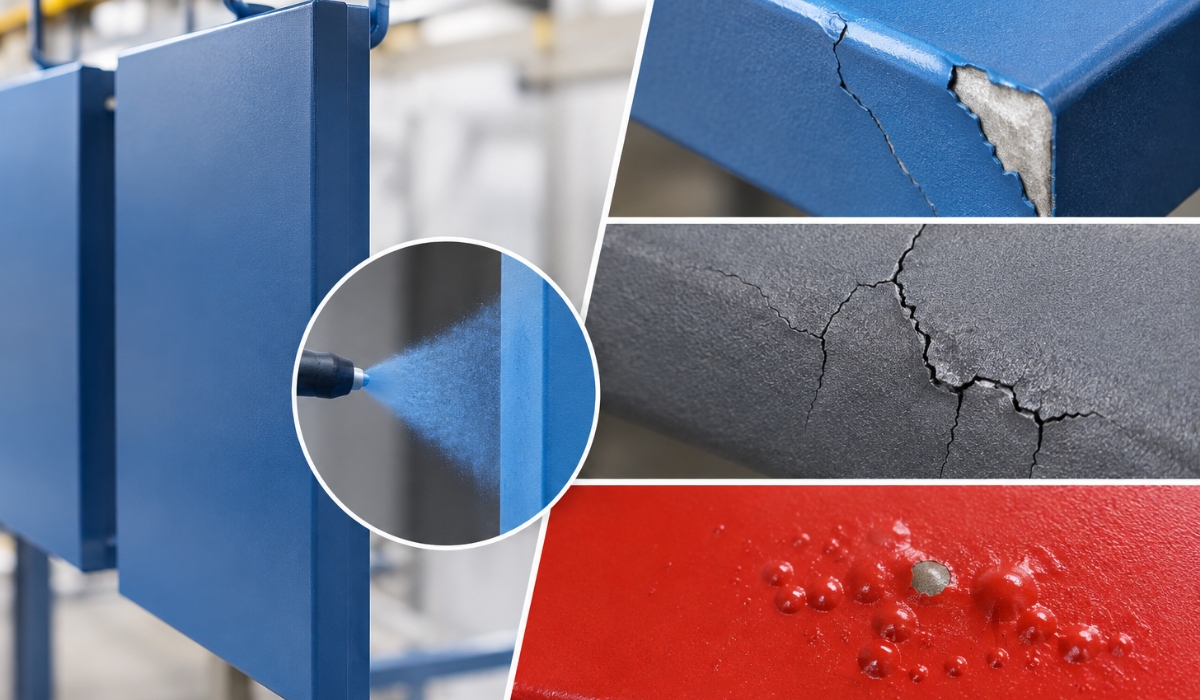
Powder coating can provide a durable, attractive, and corrosion-resistant finish, but it can peel, crack, blister, or fail when the coating process is not properly controlled. The most common causes include inadequate surface preparation, poor adhesion, incorrect curing temperature, contamination, moisture, unsuitable powder selection, and improper application. Understanding why powder coating peels is important for manufacturers, fabricators, and maintenance teams because many coating failures begin before the powder is even applied. By identifying the cause early, you can improve coating performance, reduce rework, and extend the service life of the finished component.
Powder coating failure usually results from a problem with surface preparation, application, curing, or the service environment. Unlike liquid paint, powder coating must be properly bonded to a prepared substrate and then cured at the correct temperature and time.
One major cause is inadequate surface preparation. Oil, grease, rust, mill scale, dust, old coatings, or other contaminants can prevent the powder from making proper contact with the substrate. Even when the finished surface initially looks good, poor adhesion can eventually cause peeling or flaking.
Another common issue is incorrect curing. Powder coating requires a specific combination of part temperature and curing time. If the coating is under-cured, it may have poor adhesion, hardness, chemical resistance, or durability. Over-curing can also affect appearance and coating performance.
Cracking may occur when the coating is too thick, the substrate flexes, the powder is unsuitable for the application, or the coated component experiences impact or thermal stress. Moisture, chemicals, UV exposure, salt, and extreme temperatures can also contribute to premature failure.
Therefore, diagnosing the failure requires looking at the entire coating process rather than only the visible defect.
Several factors determine whether a powder-coated surface will remain durable and attractive over time.
Proper cleaning and pretreatment are essential for strong adhesion. The substrate should be free from oil, grease, rust, dust, and other contaminants. The appropriate pretreatment depends on the material, such as steel, galvanized steel, aluminum, or another substrate.
Not every powder coating is suitable for every application. Polyester, epoxy, epoxy-polyester hybrid, and other formulations have different performance characteristics. Outdoor components generally require a formulation designed for weather and UV exposure.
Applying too little powder can result in inadequate coverage and corrosion protection. Excessive thickness may cause defects such as cracking, poor appearance, or reduced flexibility. Consistent film thickness is therefore important.
The powder must reach the manufacturer's specified metal temperature for the required duration. Oven temperature alone does not always indicate whether the part has been properly cured.
Humidity, chemicals, salt exposure, sunlight, temperature changes, and mechanical impact can affect coating life. A coating designed for indoor use may not perform adequately in a harsh outdoor or industrial environment.
Powder coating peeling and cracking can have several different causes, and identifying the pattern of failure can help determine the root problem.
Poor adhesion: If the substrate was not cleaned or pretreated correctly, the powder may not bond strongly to the surface. Peeling can then occur around edges, corners, or areas exposed to impact.
Incorrect curing: Under-cured powder may remain softer or weaker than intended. This can lead to poor adhesion, reduced chemical resistance, and premature failure.
Contamination: Oil, silicone, moisture, dust, or other contaminants can create surface defects and weak bonding areas.
Excessive coating thickness: A coating that is significantly thicker than the recommended range may develop cracking, poor flow, or other defects.
Mechanical damage: Scratches, impacts, bending, drilling, or abrasion can break the coating film. Once the substrate is exposed, corrosion may develop underneath the surrounding coating.
Corrosion beneath the coating: If rust remains on the substrate or moisture enters through damaged areas, corrosion can spread underneath the coating and cause lifting or blistering.
Improper powder storage: Powder exposed to excessive heat or moisture can experience changes that affect application and final coating quality.
Powder coating is widely used where a durable and visually consistent finish is required. Common applications include automotive components, machinery, metal furniture, electrical enclosures, architectural aluminum, appliances, agricultural equipment, fencing, gates, handrails, and industrial equipment.
In architectural applications, powder coating is often selected for its appearance and resistance to outdoor exposure. Industrial components may require coatings with improved chemical, abrasion, or corrosion resistance.
For indoor furniture and equipment, the coating may primarily need good appearance, hardness, and resistance to everyday wear. Outdoor products require additional consideration of UV exposure, humidity, rain, and temperature changes.
The application environment should therefore be considered before choosing a powder coating system. Selecting a coating based only on color or initial appearance can lead to premature failure when the component is exposed to conditions beyond the coating's intended performance range.
When selecting a powder coating system, consider the substrate, operating environment, required appearance, mechanical demands, and expected service life.
First, identify the material being coated. Steel, galvanized steel, and aluminum may require different preparation and pretreatment processes. Next, determine whether the component will be used indoors or outdoors and whether it will encounter moisture, chemicals, salt, UV radiation, abrasion, or high temperatures.
Check the powder manufacturer's technical data sheet for the recommended film thickness, curing schedule, substrate preparation, storage conditions, and performance characteristics. The curing schedule should be based on the actual temperature reached by the component rather than relying only on the oven's displayed air temperature.
Quality control should include checking surface cleanliness, film thickness, cure, adhesion, and visual appearance. Where appropriate, standardized tests can help identify coating weaknesses before products reach the customer.
Most importantly, avoid treating peeling or cracking as purely an application problem. A failure investigation should examine preparation, powder handling, application equipment, curing, substrate condition, and service environment together.
Understanding why powder coating peels, cracks, or fails helps manufacturers prevent costly rework and improve long-term coating performance. The most common causes include inadequate surface preparation, contamination, incorrect powder selection, excessive or insufficient film thickness, improper curing, and harsh service conditions. A reliable powder coating process requires attention to every stage, from substrate preparation through final inspection. Following the powder manufacturer's technical requirements and maintaining consistent process controls can significantly reduce coating defects and help achieve a durable, professional finish.
Powder coating may peel because of poor surface preparation, contamination, inadequate pretreatment, incorrect curing, excessive moisture, or weak adhesion between the coating and substrate.
Powder coating can crack because of excessive film thickness, mechanical stress, bending, impact, unsuitable powder formulation, poor curing, or movement of the substrate.
Minor damage can often be repaired after proper cleaning and preparation. Extensive peeling or corrosion may require complete removal and recoating for reliable results.
A primer is not always required. However, primers or specialized pretreatment systems may improve corrosion protection and adhesion for certain substrates and demanding environments.
Defects can be reduced through proper surface preparation, correct powder selection, controlled film thickness, appropriate curing, clean equipment, proper powder storage, and regular quality checks.