In today’s competitive manufacturing and customization landscape, flawless detailing is essential for both aesthetics and functionality. Businesses and customers alike expect sharp lines, uniform depth, and professional finishes in engraved products, whether for signage, branding, decoration, or industrial parts.
This level of perfection is difficult to achieve manually but comes naturally with modern CNC machines. Using advanced automation and digital precision, CNC engraving delivers consistent results across single pieces and mass production runs. From intricate artistic designs to highly technical markings, CNC technology ensures every cut is clean, accurate, and repeatable, making it the preferred choice across industries.
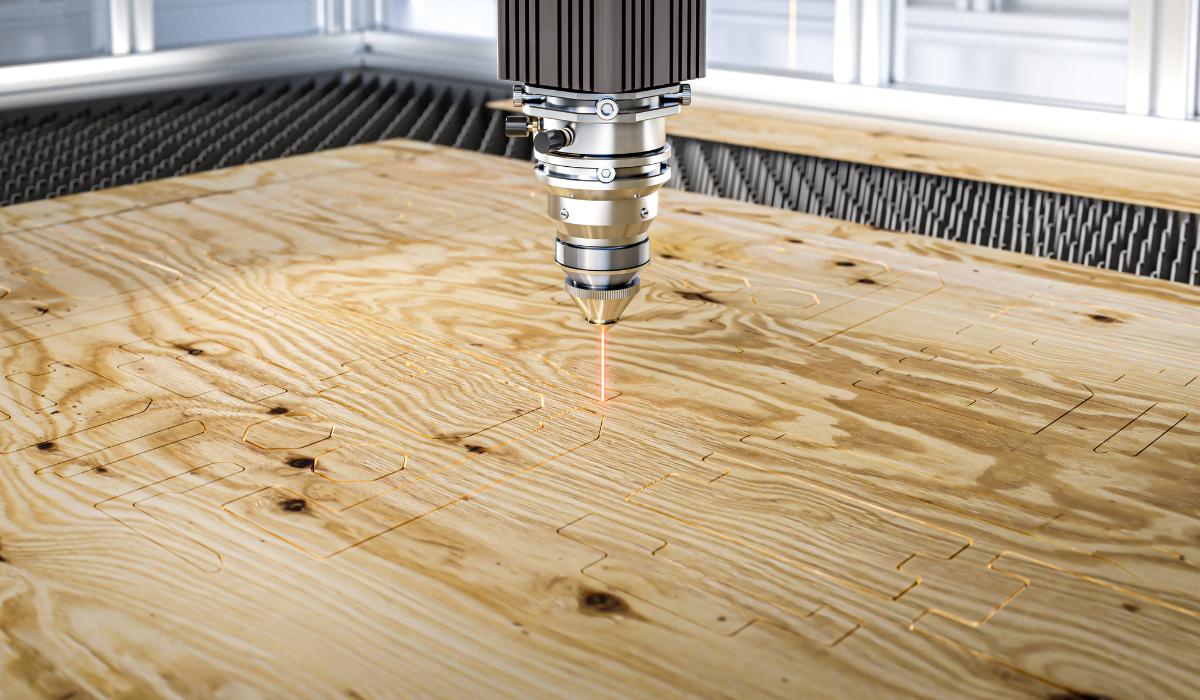
CNC engraving is a process in which a computer directs a cutting tool to carve text, patterns, or images into a material’s surface. The term CNC stands for Computer Numerical Control, meaning the machine operates based on programmed instructions rather than manual guidance. Designers first create a digital model, which is then converted into precise commands that control the tool’s movement, speed, and depth. This form of computer-controlled machining allows extremely detailed work on materials such as wood, metal, acrylic, plastic, and stone. Because the machine follows exact coordinates, CNC carving achieves levels of detail and uniformity that are nearly impossible with traditional methods.
The exceptional quality of precision engraving comes from the sophisticated technology built into CNC systems. Advanced motors move the cutting head along multiple axes with microscopic accuracy, while rigid frames prevent vibration that could affect the finish. Specialized software calculates the most efficient cutting paths, ensuring smooth curves, sharp corners, and consistent depth throughout the design.
In CNC router engraving, these toolpaths are optimized to minimize material stress and maximize surface quality. Sensors and calibration systems further enhance engraving accuracy, allowing the machine to maintain perfect alignment even during long production cycles. This combination of digital intelligence and mechanical precision is what enables CNC machines to produce flawless engravings every time.
One of the greatest advantages of automated engraving is its ability to reproduce identical results repeatedly. Human operators, no matter how skilled, can experience fatigue, minor hand movements, or concentration lapses that lead to inconsistencies. CNC systems eliminate these variables entirely. Once a program is set, the machine executes it exactly the same way for each piece, ensuring perfect uniformity.
This repeatability is especially important for industrial engraving, where parts must meet strict quality standards and specifications. Whether producing a single custom item or thousands of identical components, CNC technology guarantees that every engraving matches the original design with zero deviation.
Modern CNC machines are highly versatile and capable of engraving a wide range of materials with outstanding results. Wood is commonly used for decorative panels, furniture accents, and signage, where CNC carving can create intricate textures and patterns. Metals such as aluminum, brass, and steel are ideal for durable nameplates, tools, and machinery components requiring long-lasting markings.
Acrylic and plastics are popular for modern displays and illuminated signs because they produce crisp edges and smooth surfaces when engraved. Even hard materials like granite and marble can be engraved for architectural or memorial applications. This adaptability makes custom engraving services suitable for virtually any industry or creative project.
Compared to manual techniques, CNC engraving offers clear advantages in speed, accuracy, and scalability. Traditional engraving relies heavily on human skill and can be time-consuming, especially for complex designs. In contrast, CNC systems handle intricate patterns effortlessly and complete projects much faster. Manual methods may produce slight variations between pieces, while CNC technology ensures perfect duplication every time.
Additionally, complex geometric shapes and fine details that would be extremely challenging by hand are easily achievable through CNC router engraving. While traditional craftsmanship still holds artistic value, modern industries prefer CNC solutions for their efficiency, reliability, and superior finish quality.
The ability of CNC machines to create perfect engravings consistently comes from a powerful combination of digital design, automated control, and mechanical precision. By eliminating human error and maintaining exact cutting parameters, CNC technology delivers unmatched precision engraving across a wide variety of materials and applications.
Whether for decorative products, branding elements, or critical industrial components, CNC engraving ensures professional results that stand the test of time. If you are looking for dependable custom CNC engraving services that combine quality, speed, and accuracy, now is the perfect time to take advantage of this advanced technology.
Contact us today to discuss your project, request a quote, or learn how our CNC solutions can bring your designs to life with flawless precision.