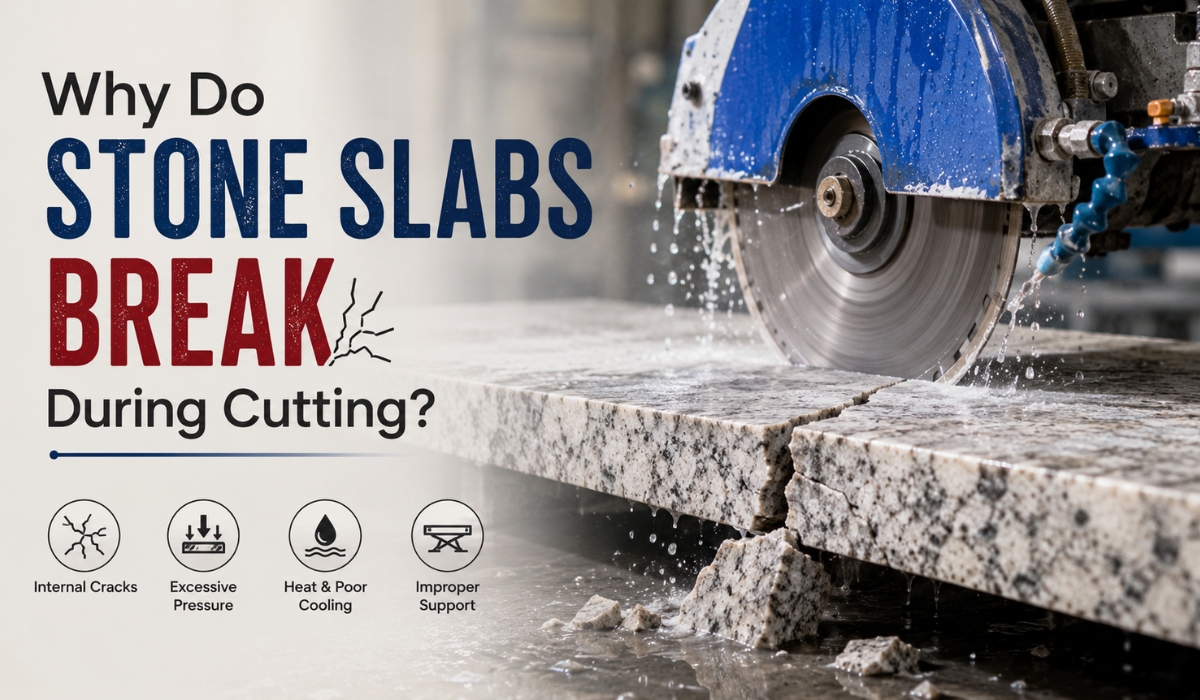
Why do stone slabs break during cutting? Stone slabs break during cutting mainly because of internal cracks, excessive pressure, improper support, heat buildup, incorrect cutting techniques, or weaknesses within the material. Even a high-quality granite, marble, quartzite, or engineered quartz slab can crack if it is not handled and cut correctly.
Stone fabrication requires more than simply cutting a slab to a required size. Fabricators need to consider the slab's thickness, composition, existing veins or cracks, cutout locations, blade condition, cutting speed, and support underneath the material. Understanding these factors can help reduce breakage, material waste, and unexpected fabrication costs while producing accurate and durable countertops.
There are several reasons a slab can crack or break during the fabrication process. Some problems come from the stone itself, while others are caused by cutting or handling techniques.
Natural stone such as granite, marble, and quartzite can contain tiny fissures, veins, or weak areas that may not be obvious when the slab is first inspected. When cutting reaches one of these areas, the existing weakness can expand and cause the slab to crack.
Certain patterns and natural veining are also more fragile than others. Experienced fabricators inspect the slab carefully before deciding where to place cuts, edges, sinks, and other openings.
Proper support is extremely important during stone cutting. A large slab that is not supported evenly can experience stress as the blade moves through it.
If part of the slab is unsupported, the weight of the stone can create pressure around the cutting area. This can result in cracks, especially toward the end of a cut when the remaining material becomes weaker.
Applying too much pressure while cutting can put unnecessary stress on the slab. The cutting machine and blade should do the work rather than forcing the blade through the material.
Experienced fabricators use controlled cutting speeds and appropriate pressure according to the type and thickness of the stone.
Different materials require suitable diamond blades and cutting conditions. A blade that is worn, unsuitable, or incorrectly maintained can create excessive friction and vibration.
Cutting too quickly can also generate unnecessary stress and heat. On the other hand, an improperly configured machine can affect cutting accuracy and increase the risk of damage.
Stone cutting generates heat. Water is commonly used during wet cutting to cool the blade and reduce dust.
If cooling is inadequate, excessive heat can affect the cutting process and contribute to cracking or blade problems. Maintaining proper water flow and equipment condition is therefore an important part of professional stone fabrication.
Sink and cooktop cutouts create openings in the slab and naturally reduce the amount of material supporting the surrounding area. Sharp internal corners can concentrate stress and increase the possibility of cracking.
Professional fabrication generally uses carefully planned cutout shapes and positioning to minimize unnecessary stress.
Preventing slab breakage starts before the actual cutting begins. A professional fabricator should evaluate the material and the project requirements carefully.
These practices are especially important when working with expensive materials where one damaged slab can result in significant material and production losses.
Professional stone cutting and fabrication are used for a wide range of residential and commercial projects. The same principles that prevent breakage during countertop fabrication are important for many different applications.
Granite, quartz, quartzite, and marble slabs are commonly fabricated into kitchen countertops. Fabricators need to create accurate sink, cooktop, faucet, and edge details while maintaining the structural integrity of the countertop.
Bathroom vanity tops require precise measurements and carefully positioned sink openings. Proper cutting helps achieve clean edges and a professional finished appearance.
Stone slabs and smaller stone pieces can be fabricated for backsplashes. Accurate measurements and cutting help ensure that the material fits properly against walls and around outlets or fixtures.
Hotels, restaurants, offices, retail spaces, and other commercial properties may use fabricated stone for countertops, reception desks, wall applications, bars, and other architectural surfaces.
Stone fabrication can also be used for fireplace surrounds, islands, outdoor countertops, tables, and other custom applications where accurate cutting and finishing are required.
Choosing the right fabricator is important when investing in natural or engineered stone. Ask how the company handles slab inspection, cutting, transportation, and installation before approving your project.
First, look for a fabricator with experience working with the specific material you have selected. Granite, marble, quartzite, and quartz can have different characteristics, so experience with the material matters.
Next, ask about the fabrication process. A professional company should be able to explain how measurements are confirmed, how the slab layout is planned, and how sink and cooktop cutouts are positioned.
It is also useful to ask how the company handles existing cracks or natural fissures. Not every visible vein indicates a defect, but areas that may affect fabrication should be identified before cutting.
Finally, consider the complete process rather than focusing only on the cutting price. Proper measurement, fabrication, transportation, edge finishing, and installation all contribute to the final result.
Stone slabs break during cutting for several reasons, including natural weaknesses, poor support, excessive pressure, incorrect blades, improper cutting speeds, heat, and poorly planned cutouts. Professional stone fabrication reduces these risks by combining accurate measurements, careful slab inspection, proper equipment, controlled cutting, and safe handling.
Whether you are choosing granite, quartz, marble, or quartzite for a kitchen, bathroom, or commercial project, working with an experienced fabricator can help minimize material damage and achieve a clean, durable finished installation.
Yes. Cracks can occur due to internal weaknesses, excessive pressure, poor support, or improper cutting techniques.
Granite, marble, quartz, and quartzite can all be cut professionally using the right tools and techniques.
Sink cutouts weaken the slab. Sharp corners, poor support, or incorrect cutting can increase the risk of cracking.
Proper slab inspection, support, cutting speed, cooling, and professional fabrication can help prevent breakage.
Some minor cracks can be repaired, but severe or structural cracks may require replacing the affected section or slab.